 Fraunhofer Center for Silicon Photovoltaics CSP
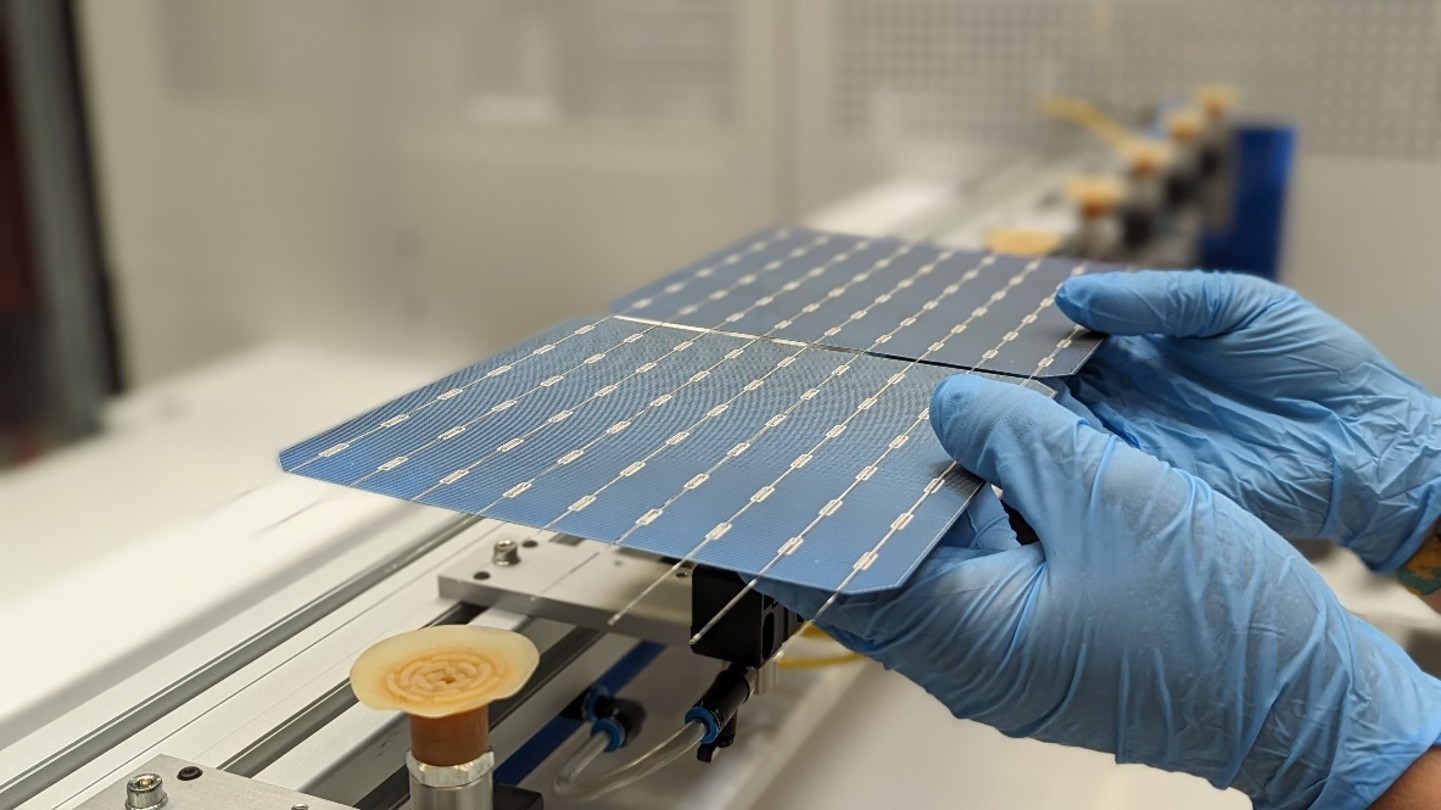

Photovoltaics is one of the key technologies for a climate-neutral and secure energy supply. However, to further increase the performance of modern solar cells, it is necessary to advance not only the cells themselves but also the processes used to create their electrical connections. This is precisely where the “LOTSE” research project at the Fraunhofer Institute for Microstructure of Materials and Systems IMWS in Halle (Saale) comes in. The project focuses on the research and development of a cost-effective method for electrically connecting solar cell strings using lead-free solder pastes, which offer cost advantages in manufacturing and are suitable for interconnecting sensitive high-efficiency solar cells.
The quality of the electrical connections is crucial to the performance and reliability of solar cells. This process involves soldering metal wires to the top and bottom surfaces of the cells. In established production, tin-lead solders are frequently used for this purpose. However, given the increasing sensitivity of some modern high-efficiency solar cells to thermal stress, the resource costs and availability of silver, and the environmental drawbacks of lead-containing materials, there is an urgent need for new solutions. At the same time, resource-conserving and energy-efficient production processes are gaining importance in light of rising demands for sustainable photovoltaics.
“We want to demonstrate that lead-free solder pastes can serve as an alternative to silver-containing conductive adhesives in an existing manufacturing process. In doing so, we combine technological performance and cost reductions with greater sustainability,” says Dr. Stephan Großer, project manager at Fraunhofer IMWS. A key focus of the project is therefore on gaining a deeper understanding of the contact formation between the solder paste, the solar cell, and the wire. In particular, low-temperature interconnects will be investigated, as they enable the use of new materials on temperature-sensitive, high-efficiency cells, contribute to silver savings, and can additionally reduce energy consumption during manufacturing. This involves precisely tailoring the solder paste and process control to the contact structure. Only when these factors interact optimally can permanently stable and high-performance connections be established.
Using established and newly developed analytical methods, the contact structures are examined for homogeneity, stability, and potential defects. The goal is to detect contact defects and inhomogeneities at an early stage and to evaluate their impact on reliability and service life. Detailed microstructural analysis provides important insights into how the solder paste bonds with the metallic contact structures of the solar cells. This enables the identification of potential weak points and the targeted refinement of solder pastes and process control.
At the same time, suitable, cost-effective, and environmentally friendly materials are selected and tested in collaboration with industry partners. Close cooperation with companies along the value chain is intended to ensure that the developed solutions not only function under research conditions but are also relevant for subsequent industrial implementation.
Eliminating lead, substituting silver, and lowering processing temperatures offer both environmental and economic benefits. In addition to improving the environmental sustainability and recyclability of PV modules, the use of cost-effective, readily available materials can help strengthen regional value chains and ensure the competitiveness of European companies. At the same time, innovative contact technologies can help reduce manufacturing costs and further develop photovoltaics as a key pillar of a sustainable energy supply.
(October 7, 2026)